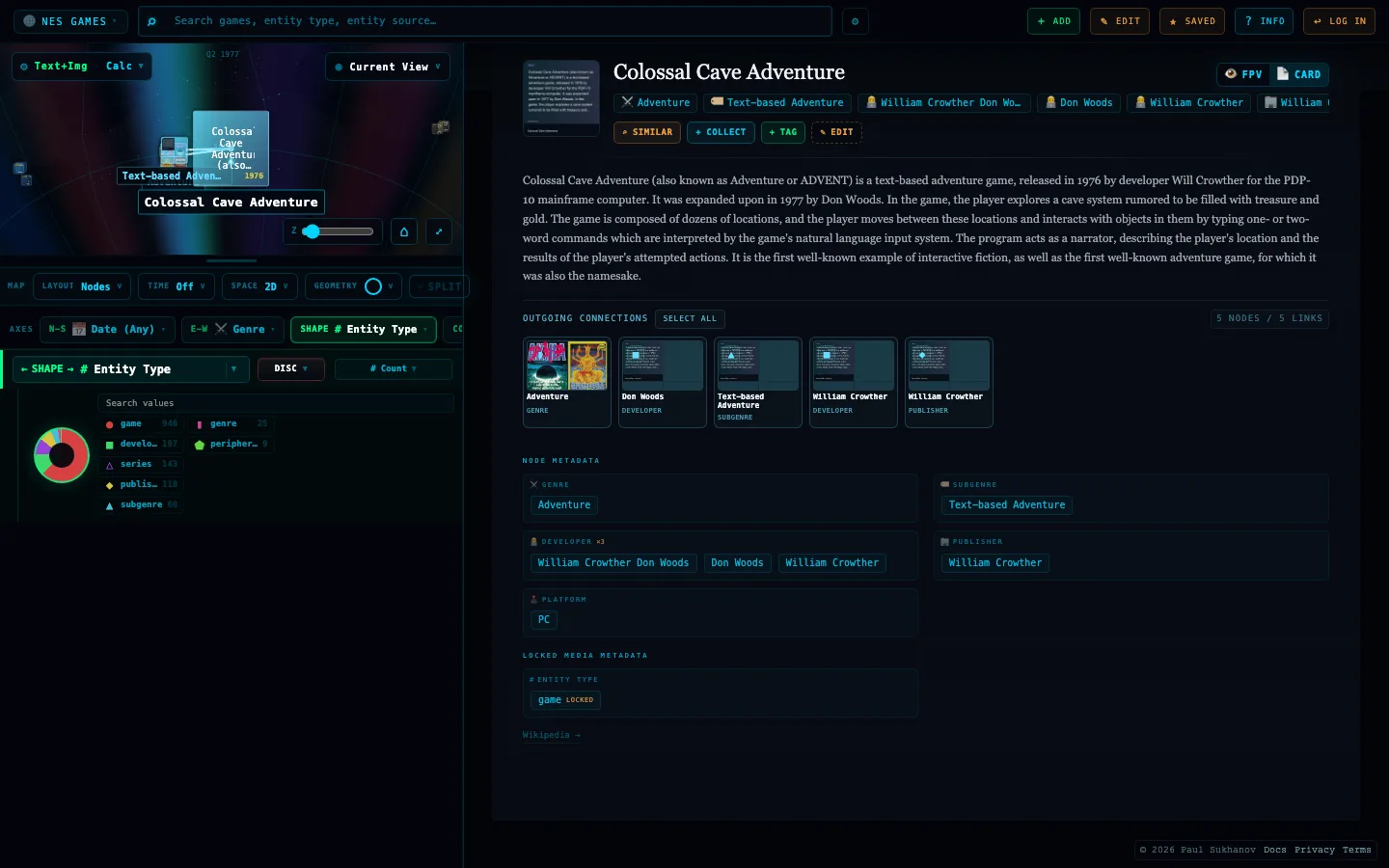
Trace a medium as it evolves.
Move from landmark games to genres, creators, and connected releases across a living historical map.
Explore this universeCronologies
Turn documents, media, and tables into private semantic maps you can search, connect, and explore.
01 The premise
A semantic map places every image, document, and row by what it means—so related things land in the same neighborhood. Distance becomes similarity, and patterns a spreadsheet would hide turn into something you can see.
An image, a paragraph, a spreadsheet row — each is read for meaning and placed as a single coordinate.
Related meaning falls close; unrelated meaning drifts apart. Distance on the map is similarity.
Link nodes by hand and switch to a force-directed layout—connected things pull together, so the map follows the structure you see.
02 See it in practice
The same instrument can read cultural history, literary references, or visual similarity. Open a universe and follow whatever catches your attention.
Move from landmark games to genres, creators, and connected releases across a living historical map.
Explore this universe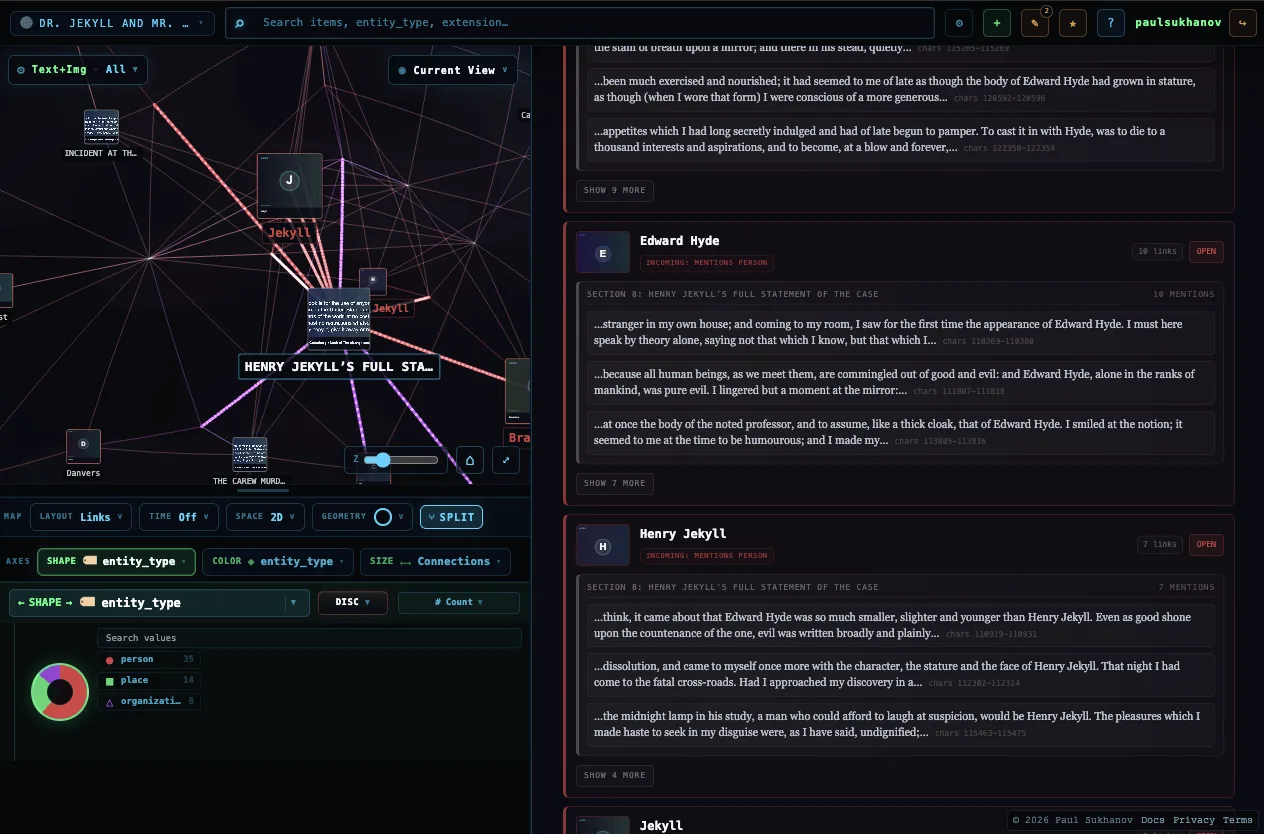
Turn passages, people, and recurring references into a graph you can inspect from any direction.
Explore this universe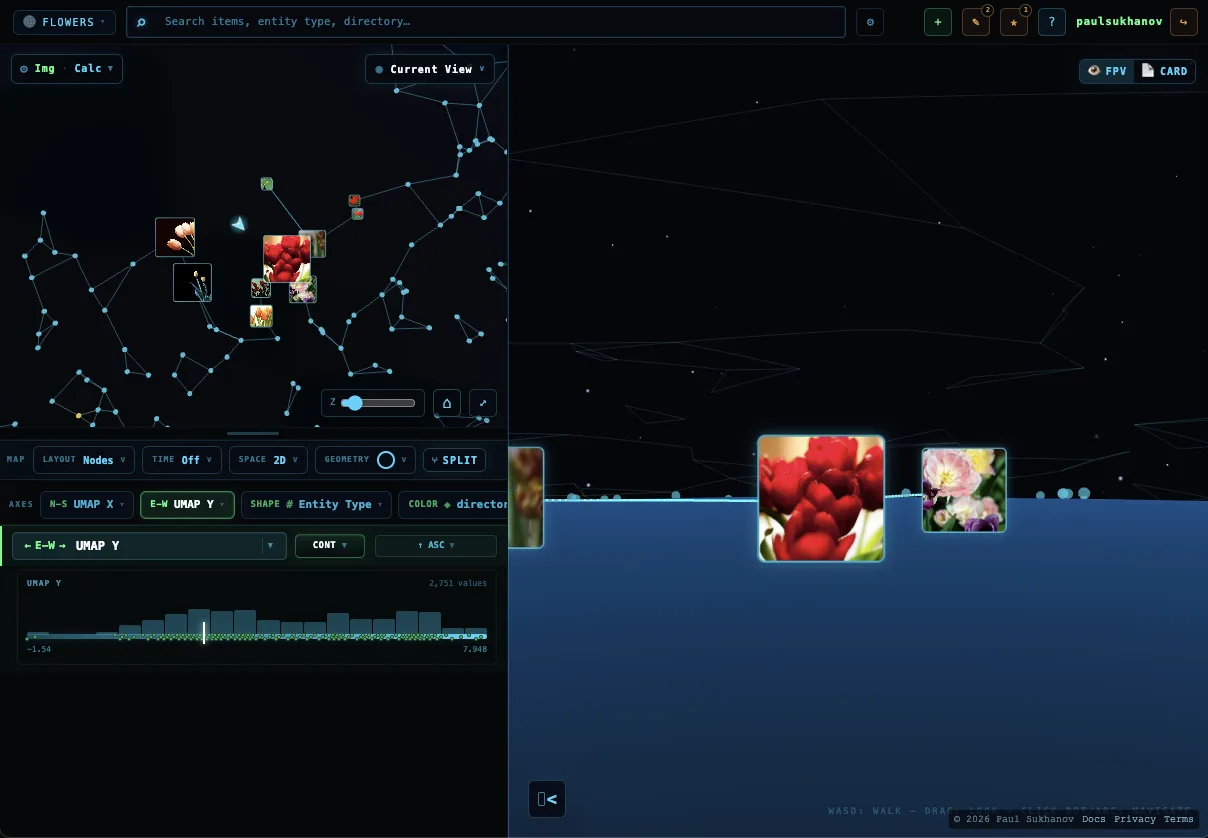
Arrange thousands of images by what they look like, then enter the field and explore the neighborhoods.
Explore this universe03 Bring your own world
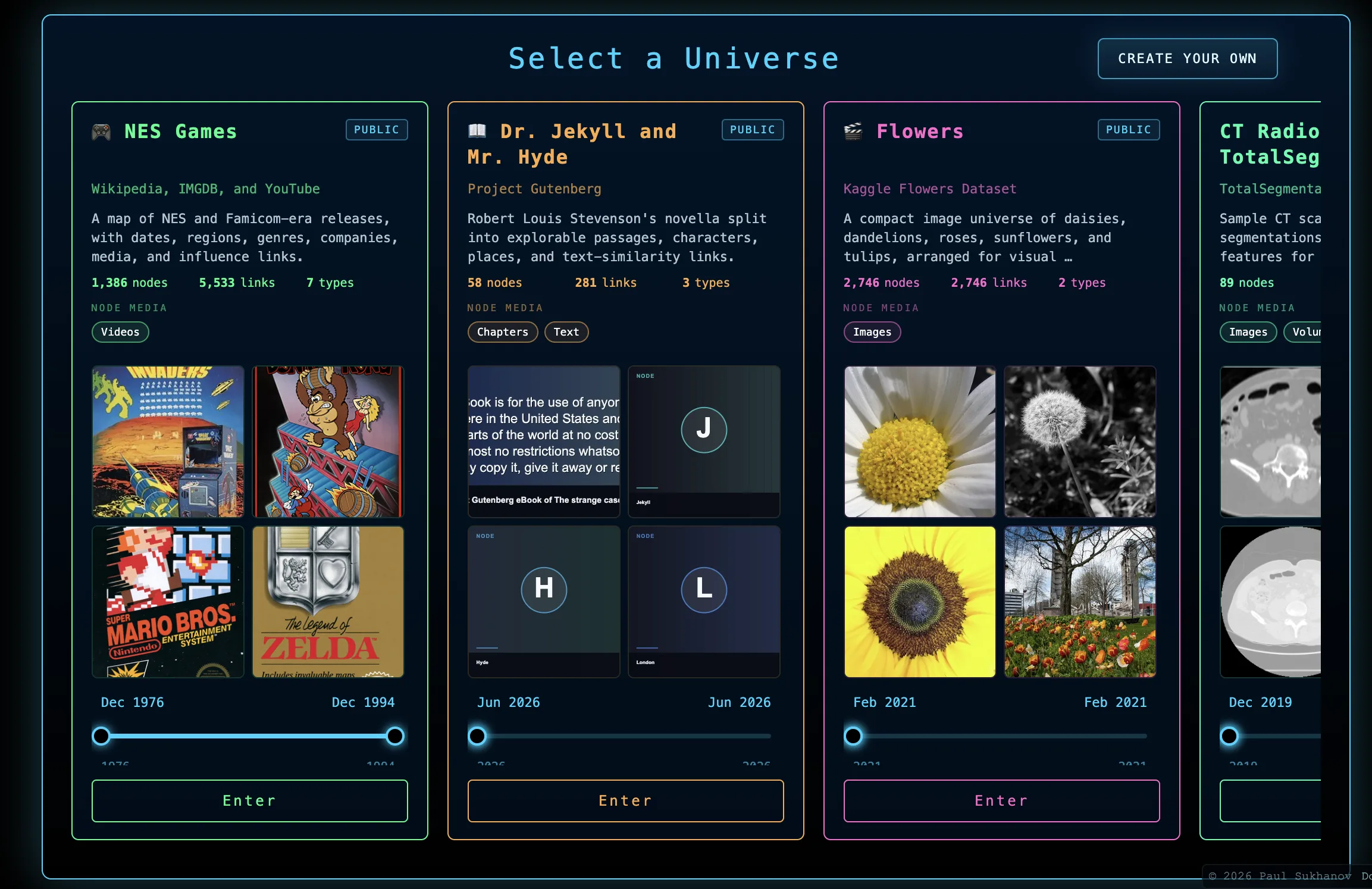
Bring spreadsheets, documents, or media. Cronologies builds a world from them, then hands you the controls to search, reframe, connect, and travel through it.
04 The instrument
The same universe renders as a globe, a grid, a floating graph, or a world you walk through in first person. Change the form without ever leaving your data.
Discover by exploring
Navigate nodes, links, timelines, and routes until unexpected patterns emerge.